UTTORON
UTTORON is a Sustainable Empowerment Project focused on uplifting underprivileged communities through skill development and livelihood support.
This is a grassroots social impact initiative powered by community support and charitable funding to create long-term self-reliance.
UTTORON (a Bengali word meaning *“upliftment” or “rising above”) is a sustainable livelihood program designed to break the cycle of poverty and create long-term self-reliance for disadvantaged and underprivileged people.
In many communities, charitable contributions such as Zakat are often distributed in the form of short-term relief like food, clothing, or financial aid. While these efforts bring immediate comfort, they rarely lead to lasting economic stability or meaningful transformation in the lives of the recipients.
To address this gap, we initiated a sustainable development initiative titled “Uttoron”, focused on empowering individuals through livelihood creation, skill enhancement, and income-generating opportunities. The goal of this program is not only to support people temporarily, but to help them rise above poverty with dignity and sustainable independence.



OUR IMPACT
At a Glance

The Process
Built through consultation, observation, and trial-and-error, the following process is followed for every UTTORON startup:
The success of Uttoron begins with selecting the right individuals who truly need support and are capable of transforming opportunity into sustainable livelihood.
Announcements are made in deprived and underserved communities to reach potential beneficiaries. Interested individuals submit application forms, which are collected and initially reviewed by trained volunteers. After this, a structured process of interviews, field screening, and background verification is conducted to ensure transparency and fairness in selection.
Candidates are evaluated based on four key criteria:
- Financial background: Applicants must have limited or no access to existing loans, and their current income sources are carefully assessed and verified.
- Existing skills: Practical abilities such as sewing, farming, tailoring, small trade knowledge, or basic numeracy are considered to align them with suitable livelihood opportunities.
- Community reputation: Feedback from neighbors, local leaders, and family members is taken into account to understand their social standing and reliability.
- Commitment and motivation: Genuine willingness to improve their life situation, combined with discipline and readiness to work hard, is the most important factor in final selection.
Through this careful and transparent process, Uttoron ensures that support reaches those who are not only in need but also ready to build a sustainable future.
a suitable donor and project
After identifying the right candidates, Uttoron ensures that each individual is connected with a suitable donor and a sustainable livelihood project that best fits their potential and local opportunities.
The program operates through a range of livelihood models, each designed with different levels of investment, skills, and operational complexity. This allows flexibility in matching both donor capacity and candidate readiness.
The matching process is based on three key factors:
- Local market conditions: The selected project must be viable in the candidate’s area and have strong chances of long-term sustainability.
- Investment alignment: The level of support provided by the donor is carefully matched with the capital requirement of the chosen business model.
- Skill compatibility: Candidates are assigned to projects that align with their existing skills, ensuring they can operate the business effectively with minimal additional training.
Donors engage with the program through volunteers, direct communication channels such as phone or email, or community referrals. Each matching decision is carefully documented to maintain transparency, accountability, and traceability throughout the process.
Through this structured approach, Uttoron ensures that every partnership between donor and beneficiary is meaningful, practical, and capable of creating lasting impact.
funds
Once a candidate is matched with a suitable project, Uttoron focuses on building their capacity and ensuring they are fully prepared to operate their livelihood activity with confidence and responsibility.
Each beneficiary undergoes an intensive 7 to 10 days orientation program conducted by trained volunteers and field mentors. The training is practical, hands-on, and tailored to the specific business model assigned to the individual.
The training includes:
- Business development: Guidance on how to start, manage, and grow the assigned small business in a sustainable way.
- Technology and operations: Practical instruction on using, maintaining, and repairing any tools or equipment provided under the project.
- Financial literacy: Basic education on money management, including opening bank accounts, tracking income and expenses, understanding savings habits, and financial discipline.
Alongside training, necessary tools and infrastructure are arranged and prepared according to the project type. This may include items such as livestock shelters, vegetable stalls, tailoring equipment, or small shop setups.
Once training is completed and all resources are in place, the required funds, tools, and infrastructure are formally handed over to the beneficiary. This ensures they begin their journey with proper knowledge, resources, and confidence to operate independently.
Through this structured preparation phase, Uttoron ensures that every beneficiary is not only funded but truly empowered to build a stable and dignified livelihood.
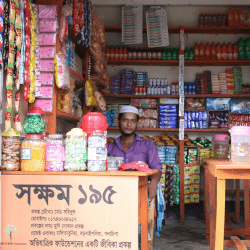
through success of SHOKKHOM
The true impact of Uttoron is measured not at the point of support delivery, but through the long-term transformation of the lives it touches.
After the handover of resources and training, volunteers maintain continuous communication with each beneficiary to monitor progress, provide guidance, and help resolve challenges. Every journey is closely followed to ensure that the livelihood activities remain stable and sustainable over time.
Success stories are systematically documented to showcase real-life transformation, while setbacks are carefully analyzed to improve future interventions and strengthen the program model. This ongoing feedback loop ensures continuous learning and improvement within the initiative.
To maintain transparency and accountability, structured oversight mechanisms are in place:
- Regular field visits: Members of the oversight committee conduct yearly physical visits to beneficiary locations to assess progress and verify impact on the ground.
- Independent audits: Every financial transaction and allocation is reviewed annually to ensure that funds are used correctly and effectively.
- Donor transparency: Donors are provided with complete clarity, and any questions or concerns can be addressed through written or verbal explanations from the supervisory body.
Ultimately, the success of Uttoron is defined by long-term self-reliance. If, after years of support, a family is still sustaining itself independently with dignity and stability, then the mission is considered successful.
Through this continuous cycle of monitoring, accountability, and support, Uttoron ensures that every contribution leads to meaningful and lasting change.
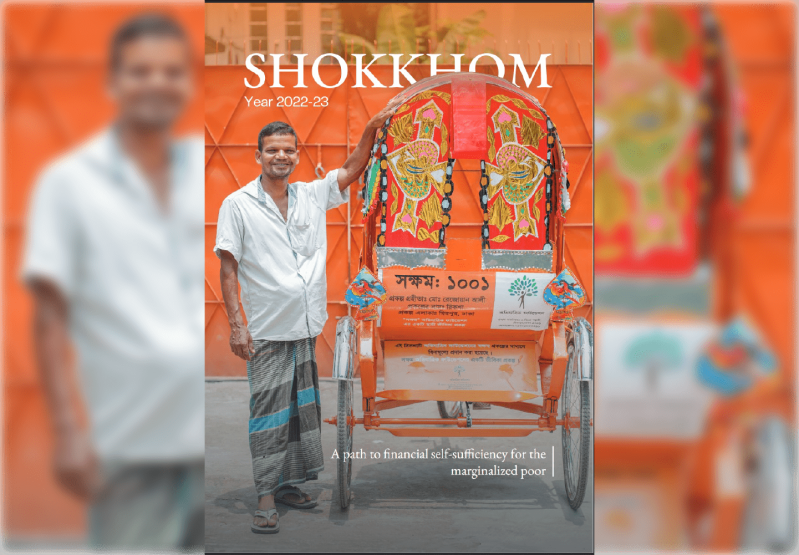
This initiative has proven to be a beacon of hope for underprivileged communities, offering them a pathway out of poverty. The project’s primary focus is on leveraging Zakat money as a means to uplift economically disadvantaged families, creating a sustainable source of income and fostering long-term stability. By empowering breadwinners to become entrepreneurs, it not only improves their living standards but also contributes to the overall economic growth of the community.

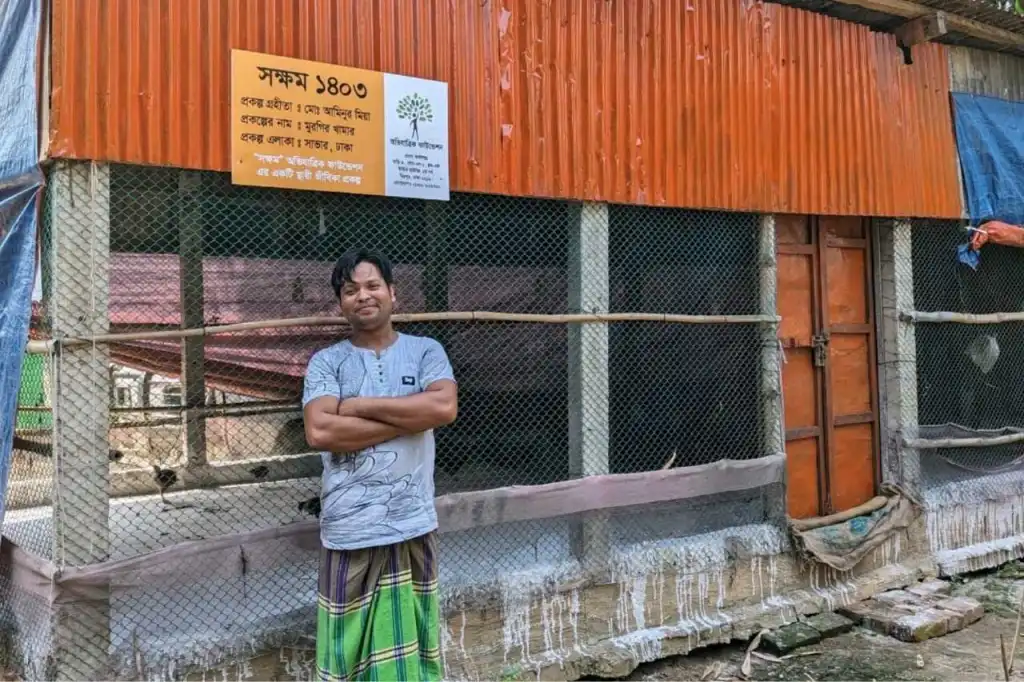
To date, UTTORON has transformed the lives of over 3,200 families, enabling them to achieve financial independence and resilience. The program provides comprehensive support, including training, mentorship, and access to essential resources, ensuring that beneficiaries are fully equipped with the tools they need to succeed. The project operates in Dhaka, Savar, Kushtia, Barisal, Patuakhali, Rangpur, Gazipur, Burimari, and Khagrachari regions. These areas were carefully selected to ensure effective monitoring and accountability, as UTTORON remains deeply committed to transparency and measurable impact.
Beyond economic empowerment, the project emphasizes gender equity and capacity building, aiming to break barriers and create equal opportunities for women and men alike. It encourages women to take on leadership roles within their families and communities, fostering a culture of inclusivity and shared responsibility. UTTORON also prioritizes the development of small and medium enterprises (SMEs), recognizing their critical role in driving economic growth and reducing unemployment.
With a strong foundation in community-driven action, UTTORON continues to expand its reach and impact, serving as a model for sustainable development and poverty alleviation across Bangladesh.
In 2025, JIBONDHARA FOUNDATION aims to empower new 1500 families under UTTORON.
They are waiting for your support


SOME FAQ ABOUT ZAKAT & UTTORON
Zakat is an Arabic word that means “purification” and “growth.” In Islamic terminology, it refers to the obligatory act of giving a fixed portion of one’s wealth to eligible recipients as an act of worship and social responsibility.
Zakat is one of the Five Pillars of Islam and is a mandatory duty for Muslims who meet the required financial threshold (Nisab). It is usually calculated as 2.5% of qualifying wealth and is given to specific categories of people mentioned in the Quran, such as the poor, needy, and those in debt.
The concept of Zakat carries both spiritual and social meaning. Spiritually, it purifies a person’s wealth and heart from greed and attachment to material possessions. Socially, it helps reduce poverty, promotes equality, and supports the well-being of the community.
In essence, Zakat is not just charity; it is a divinely prescribed system of wealth purification and social justice in Islam.
Zakat is one of the fundamental pillars of Islam and is frequently mentioned in the Quran alongside Salah (prayer), highlighting its importance in establishing a just and compassionate society.
In the Quran, Zakat refers to the obligatory purification of wealth by giving a fixed portion of one’s savings and income to those in need. It is both a spiritual act of worship and a social welfare mechanism designed to reduce poverty, inequality, and hardship within the community.
Allah commands believers to give Zakat in many verses, emphasizing that it is a right of the poor over the wealth of the rich:
- “And establish prayer and give Zakat…” (Quran 2:43)
- “Take from their wealth a charity by which you purify them and cause them increase…” (Quran 9:103)
- “And those within whose wealth is a known right, for the beggar and the deprived.” (Quran 70:24–25)
These verses show that Zakat is not merely voluntary charity but a divinely prescribed obligation. It serves to purify the giver’s wealth and soul, while ensuring social balance by supporting the poor, orphans, widows, and others in need.
In essence, the Quran presents Zakat as a powerful system of economic justice—one that strengthens solidarity, reduces inequality, and builds a more equitable society grounded in faith and responsibility.
Nisab is the minimum amount of wealth a Muslim must own before they are required to pay Zakat. If a person’s total eligible wealth is below the Nisab threshold, they are not obligated to pay Zakat.
In Islamic law, Nisab acts as a financial benchmark to distinguish between those who are required to give Zakat and those who are exempt due to limited resources. It ensures that Zakat is only taken from individuals who have sufficient wealth after meeting their basic needs.
Traditionally, Nisab is measured in terms of gold or silver:
- 87.48 grams of gold, or
- 612.36 grams of silver
If a person’s savings and eligible assets reach or exceed this value and remain in possession for one lunar year, Zakat becomes obligatory at a rate of 2.5%.
The purpose of Nisab is to protect low-income individuals from financial burden while ensuring that wealth is distributed fairly within society.
Zakat becomes obligatory when your wealth reaches the Nisab threshold and remains above it for one full lunar year (Hijri year).
Once this condition is met, Zakat should be paid annually, not monthly or randomly.
Key timing rules:
- After one lunar year (Hawl):
You must pay Zakat once your eligible wealth stays above Nisab for 12 Islamic lunar months. - Same date every year:
Many Muslims choose a fixed date (e.g., Ramadan or a personal Zakat date) and pay every year on that day. - Immediately if due:
If Zakat is already due and you have the ability, it should not be delayed without a valid reason. - Ramadan preference (optional):
While Zakat can be paid any time of the year, many people prefer Ramadan because of its higher spiritual reward.
Important note:
Zakat is not only about timing—it is about ensuring your wealth is purified regularly and reaches those in need without delay.
In short, you should pay Zakat once every year when your wealth stays above Nisab for a full lunar year.
In Islam, the eligibility to receive Zakat is clearly defined in the Quran (Surah At-Tawbah 9:60). Zakat can only be given to specific categories of people who are in need or are entitled to receive support from the Muslim community.
The 8 eligible categories of Zakat recipients:
- The Poor (Al-Fuqara)
People who have very little or no income and cannot meet basic needs. - The Needy (Al-Masakin)
Those who have some income but still cannot cover essential living expenses. - Zakat Administrators
Individuals appointed to collect, manage, and distribute Zakat. - Those whose hearts are to be reconciled
People who may be supported to strengthen their faith or social harmony. - Those in debt (Al-Gharimin)
People who are heavily in debt and unable to repay it. - In the cause of Allah (Fi Sabilillah)
Those working for the cause of Islam and community welfare, including social and humanitarian efforts. - Stranded travelers (Ibn al-Sabil)
Travelers who are stuck without resources to return home. - Those in slavery or bondage (historically applicable)
People seeking freedom from bondage or oppressive conditions.
Summary:
Zakat is not given randomly. It is a structured system of social welfare designed to ensure that wealth reaches the most deserving and vulnerable members of society.
In essence, Zakat supports poverty alleviation, social justice, and community stability by helping those who are truly in need.
A research paper titled “Islam, Neoliberalism and Social Inequality in Bangladesh: A Social Policy Perspective” has been published in a British journal, which argues that poverty alleviation through Zakat funds is more effective than microfinance.
The author of this study is Professor A. I. Mahbub Uddin Ahmed from the University of Dhaka.
This research is primarily based on a two-year field study conducted since 2017 on the livelihood project “UTTORON”, implemented by the JIBONDHARA Foundation, which is operated using Zakat funds.
Summary of the Research (Abstract)
The main objective of this chapter is to explore the relationship between Zakat and the reduction of social inequality in Bangladesh by examining the historical development of social policy, welfare regimes, and welfare practices from 1201 to the present.
It compares the neoliberal strategy of microfinance with the Islamic strategy of Zakat, using data from the UTTORON Project of the Zakat-based third sector, the JIBONDHARA Foundation.
The study collected profiles of 82 beneficiaries (49 males and 33 females) who received Zakat between 2016 and 2017. Out of a total of 33 Zakat recipients in the Dhaka district, 13 case studies (9 males and 4 females) were conducted for in-depth analysis.
The chapter concludes that Islamic welfare practice through Zakat is more effective in poverty alleviation and social welfare improvement compared to the interest-based neoliberal microfinance system.
অনলাইন জার্নাল লিঙ্কঃ https://link.springer.com/…/10.1007/978-3-030-57753-7_13
UTTORON is a sustainable livelihood initiative designed to move underprivileged individuals from dependency to long-term self-reliance through structured support, skill development, and responsible investment of charitable funds.
The process begins with community outreach and identification, where announcements are made in underserved areas to reach potential beneficiaries. Interested individuals submit applications through volunteers, followed by a structured screening process involving interviews, field verification, and background checks. Candidates are selected based on financial condition, existing skills, community reputation, and genuine motivation to improve their lives.
Once selected, each candidate is carefully matched with a suitable donor and livelihood project. This matching is based on local market viability, donor investment capacity, and the candidate’s existing skills to ensure maximum chances of success. Every match is documented to maintain transparency and accountability.
After matching, beneficiaries undergo a 7–10 day intensive training program covering business management, operational skills, and financial literacy. During this phase, necessary tools, materials, and infrastructure are arranged according to the nature of the project. Once training is completed, funds, equipment, and setup support are formally handed over to the beneficiary to start their livelihood activity.
Post-disbursement, continuous monitoring and mentorship are provided. Volunteers stay in regular contact with beneficiaries, track progress, and help resolve operational challenges. Success stories are documented, while setbacks are addressed to improve outcomes and strengthen future implementation.
To ensure transparency, regular field visits and independent audits are conducted to verify fund utilization and impact. Donors are kept informed and can access clear reporting on how their contributions are used and what outcomes are achieved.
The ultimate measure of success is not the initial handover, but long-term sustainability—whether beneficiaries are able to maintain and grow their livelihoods independently over time.
Through this end-to-end structured process, UTTORON ensures that charitable support is transformed into lasting economic empowerment and dignified self-reliance.